DLMS/COSEM Standard Explained: Why Utilities Need Hardware-Agnostic Software
Utilities scaling up their smart grids usually hit the same frustrating wall: vendor lock-in. When you rely on a meter manufacturer's proprietary software to read their specific devices, expanding your network or switching to a cheaper hardware vendor later becomes a costly nightmare.
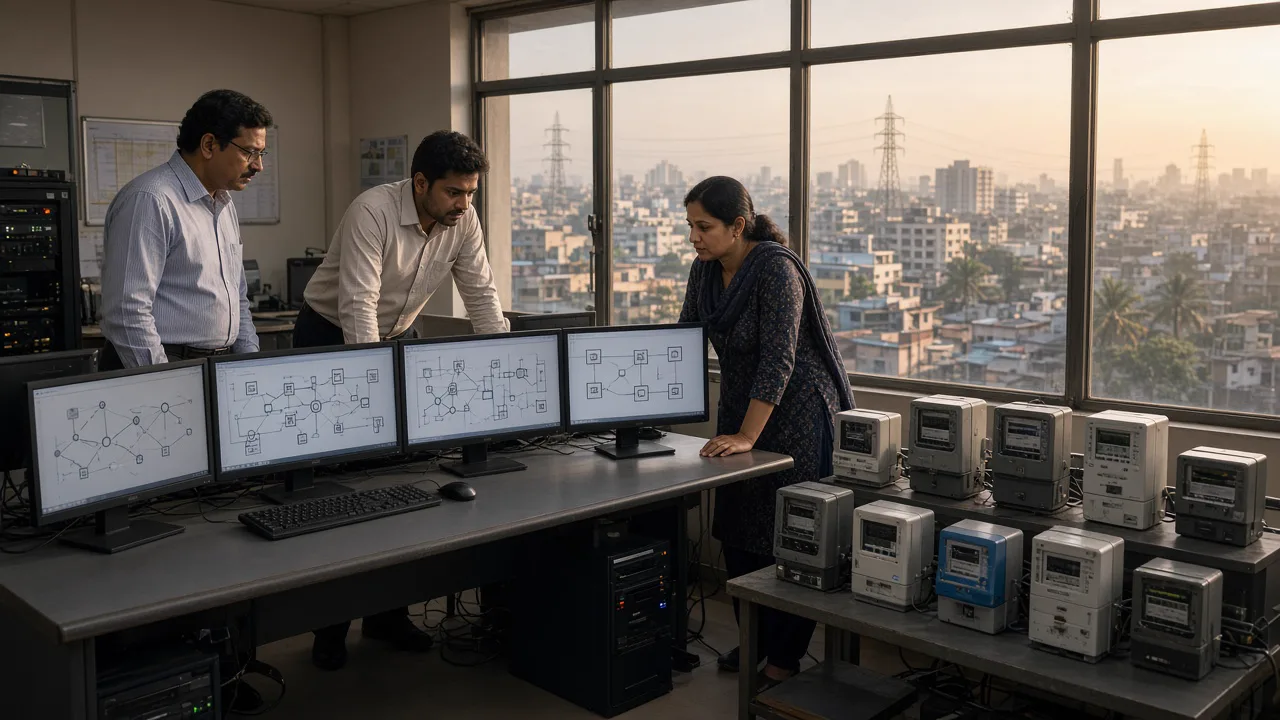
The way out of this trap is the dlms cosem protocol. It's an international standard that forces different brands of smart grid hardware to speak the same language.
Breaking Down the DLMS/COSEM Protocol
Compliant with the global IEC 62056 standard, this framework has two main parts that make smart meter communication work seamlessly:
DLMS (Device Language Message Specification)
Think of this as the communication rules. It defines exactly how data is securely exchanged between the physical meter and the utility's Head-End System (HES).
COSEM (Companion Specification for Energy Metering)
Think of this as the dictionary. It organizes the meter's information into a standardized data model using Object Identification System (OBIS) codes.
Together, they guarantee that whether you buy a meter from Genus, Secure, or Schneider, the data arrives at your servers structured, secure, and ready to use.
The Business Case for Vendor Agnostic Smart Metering
Deploying vendor agnostic smart metering software isn't just an IT upgrade; it's a procurement strategy. By running a pure-play, open-standard software platform like Zenium, utilities get complete control over their infrastructure.
Total Procurement Freedom
Utilities can split tenders across multiple hardware manufacturers to get the best pricing, knowing all the meters will connect to the same software.
One Screen for Everything
A vendor-agnostic HES puts every meter brand onto a single operational dashboard. Your team doesn't have to juggle five different proprietary systems just to run a remote disconnect or pull a load profile.
Future-Proofing
As new meter technologies hit the market, an open-standard software layer ensures you can drop new devices into your existing ecosystem without starting from scratch.
By standardizing on the DLMS/COSEM framework, Zenium lets utilities buy whatever hardware makes sense today, without worrying about whether it will still work tomorrow.